

Let it be among the bare stones of Mount Labbro, where a prophet of another time founded his church, the Jurisdavidic religion, prelude to a society of the just, republican freedom, and mutual aid. David Lazzaretti was the prophet of Amiata, the elders of those Tuscan towns, of Arcidosso, and Castel del Piano still remember him, a memory handed down from father to son.
On the top of that mountain a millenarian utopia was born and died out, similar to many others that have crossed history, to imaginary republics, or real ones, collective experiments of autonomy, horizontality and self-government. It died out, as Antonio Gramsci recounts in his Notebooks from the Prison – what a strange irony of fate, to recount freedom behind the bars of a cell – under the rifle shots of the royal guards sent to nip that out-of-control impetus in the bud. Enemy of crown and church. Or be it among the sharp rocks of Mount Chimborazo in Ecuador, the scene of the oath of Libertador Simon Bolivar, who in the icy wind of the Andes declaimed his dream of freedom for Latin America from the yoke of Spain. The day before yesterday it was Bolivar, yesterday it could have been Thomas Sankara, or Nelson Mandela, or Che Guevara. Or among the icy rocks of Anarres, an imaginary planet, a creature of the pen and from the utopian imagination of Ursula LeGuin, planet of anarchy and freedom, of brotherhood and mutualism, home of Shevek, wandering prophet in the galaxies, “You cannot buy revolution. You cannot make the revolution, You can only be the revolution. It is in your spirit, or it is nowhere.” Or in the utopian pirate societies of Madagascar, the Libertalia recounted by the late David Graeber. Or among the clustered stones of a barricade. Impetus running through human history, a bumpy and never accomplished path, that of freedom, used, abused in the name of country, god or market.




Freedom or perhaps liberation, continuous process chasing utopia, hiding and unraveling between the cracks of the world, of worlds, of different and diverse possibilities of making worlds, liberation of humans and non-humans, of every form of the living, of alliances between peoples and between living species. A journey that as such can never reach a final destination.
Narrating these events, situating them in real or imaginary places, reconstructing their plots, offers a possibility of recreating meaning in a world that of freedom now makes havoc, wrapped in the coils of authoritarianism, hatred and war, against humans and Mother Earth. It means attempting to restore meaning to history, proposing a key to interpreting the world’s events, present and past, not determined by the history made, told and revised by those who wield power, whether states, governments, armies, the market or finance, but rather seen by taking the side of those who practice the power of love, of the ideal, of care, of emancipation from all forms of oppression. That “Pouvoir” as domination or authority, aprés Gilles Deleuze and Felix Guattari, which is opposed to “puissance” , a creative and disruptive force, destitute of order and power structures, capable of opening new opportunities to a humanity lost in the ghosts of its past.
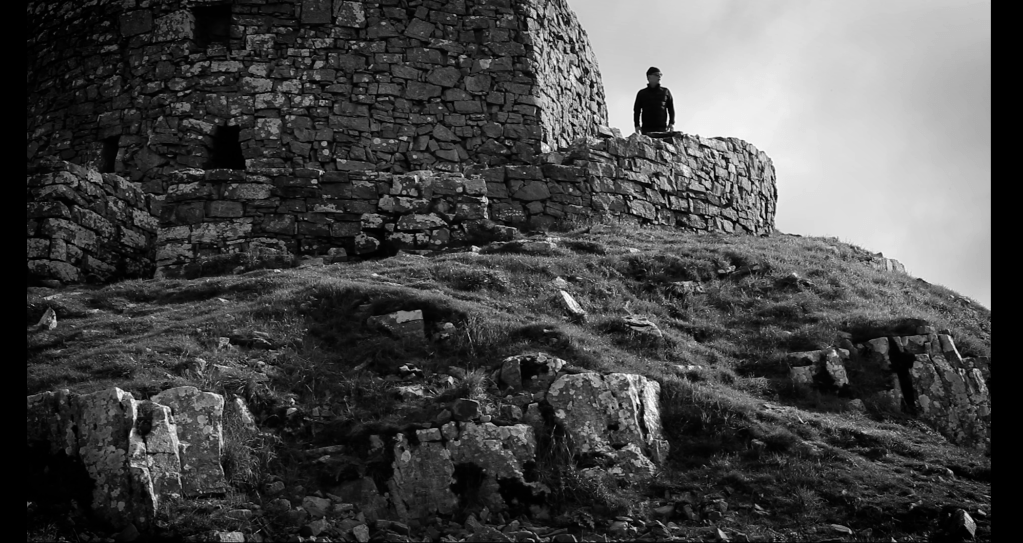
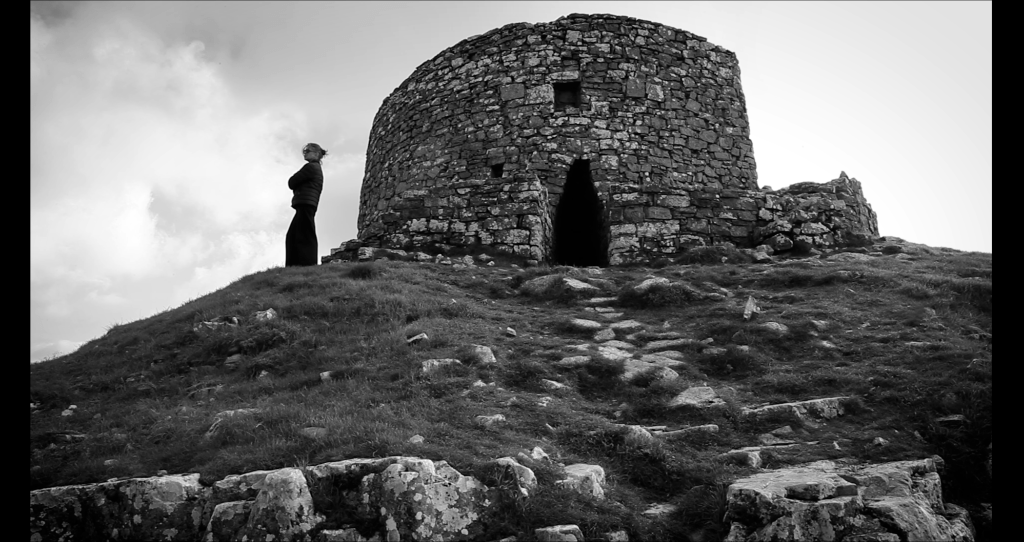
The video was filmed on the summit of Mount Labbro, Monte Amiata, where stands a hermitage erected in its time by the followers of the Jusdavidic church, founded around 1870 by David Lazzaretti , born in Arcidosso on November 6, 1834 . Many local peasant families adhered to its precepts, which in some features resemble those of utopian or socialist societies of the past. Communion of property, mutual aid, extension of the vote to women, support for the republican cause in times of monarchy, redistribution of the produce of the land according to need. Lazzaretti was shot dead by the king’s guards during a peaceful demonstration held in Arcidosso on August 18, 1878 along with other peasants. They had taken to the streets to herald the coming of the new era of justice and law.
The communitarian and egalitarian heresy did not end with the death of its founder, but continued for decades more until 2002 when the last high priest Turpino Chiappini died, to become an integral part of the history of Amiata and its communities.
Texts from:
Ursula LeGuin “The dispossessed. An ambiguous utopia,” 1974
Simon Bolivar, Juramento del Monte Sacro, Rome, August 15, 1805
Antonio Gramsci, “Quaderni dal Carcere” Notebook 25 (XXIII)
Libertalia, taken from the title of David Graeber’s essay of the same name, “The Pirate Utopia of Libertalia”; Eleuthera, 2021
 #ArtsForTheCommons